Magnus Wethal
HEMS Paramedic | Medical & Field Verification
Oslo, Norway
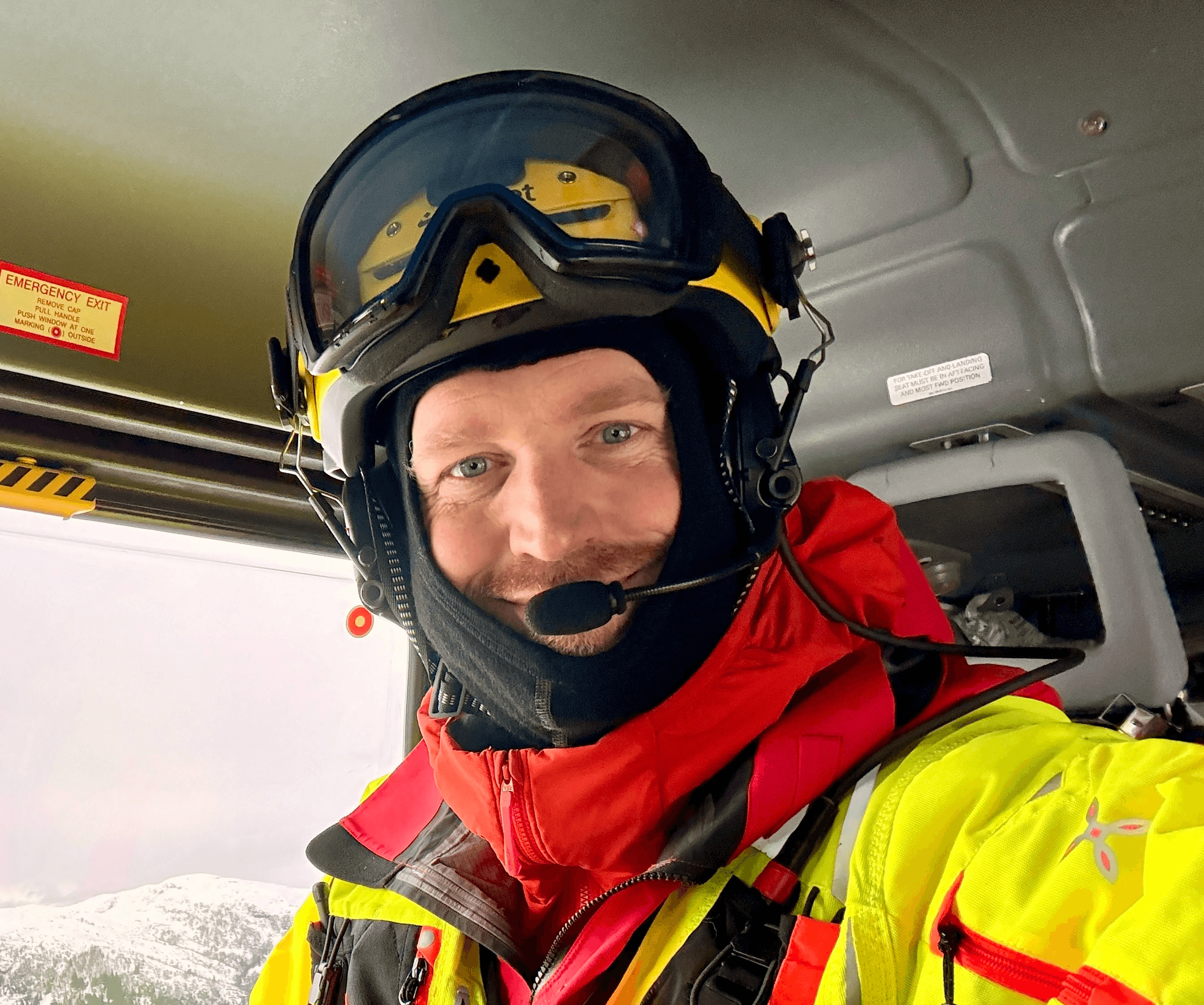
Better products come from understanding real needs, testing ideas in the field, and improving them through experience.
Responsibility and authority
Magnus brings operational and medical expertise into UR’s product-development process. His role is not simply to test finished products, but to challenge the assumptions, priorities and design decisions behind them.
Drawing on experience from prehospital care, mountain medicine and rescue operations, he helps identify real user needs, expose weaknesses and explore whether established solutions can be improved. He contributes from early discussion and concept development through field evaluation and verification.
Background
Magnus works as a rescue paramedic with the Norwegian Air Ambulance and is the founder of Mountain Safety & Medicine. His experience spans prehospital emergency care, mountain medicine, alpine rescue, instruction and safety in demanding environments.
He holds an MSc in Prehospital Critical Care and a postgraduate Diploma in Mountain Medicine. He is also an outdoor leadership graduate, an active rescuer with the Norwegian Alpine Rescue Groups and a nationally certified instructor in several mountain disciplines.
Motivation
Magnus is motivated by improving the systems people depend on when conditions are difficult and the margin for error is small.
For him, product development begins with the willingness to question existing practice. Good equipment should be based on real operational needs, reduce unnecessary complexity and support sound decisions, effective patient care and safer rescue operations.
Three field-derived insights
1. Challenge the starting point
Operational experience has taught Magnus that familiar practice is not necessarily the same as best practice. Better solutions begin by examining the assumptions behind existing equipment and procedures.
2. Design around the complete operation
A product must work as part of a wider system involving patient assessment, treatment, protection, observation and evacuation. Optimising one feature is of limited value if the complete workflow becomes more difficult.
3. Verify where limitations become visible
Cold, precipitation, gloves, fatigue and time pressure reveal weaknesses that controlled testing may overlook. Realistic field evaluation is therefore essential before a solution can be trusted