Controlled thermal performance
Controlled thermal performance

How vapour, air movement and still air affect lightweight thermal protection.

Vapour and air barrier
Vapour and air barrier
Dyneema® Composite Fabrics can act as a vapour and air barrier. By limiting moisture vapour transfer and air movement through the material, the composite helps make the internal microclimate more predictable.
Dyneema® Composite Fabrics can act as a vapour and air barrier. By limiting moisture vapour transfer and air movement through the material, the composite helps make the internal microclimate more predictable.
~1 g/m²/24h MVTR
~1 g/m²/24h MVTR
Moisture vapour transmission as low as approximately 1 g/m²/24h means selected Dyneema® composite constructions behave closer to a barrier film than any know textile. This helps explain how still air and insulation layers can be protected from vapour movement.
Moisture vapour transmission as low as approximately 1 g/m²/24h means selected Dyneema® composite constructions behave closer to a barrier film than any know textile. This helps explain how still air and insulation layers can be protected from vapour movement.

Thermal by control
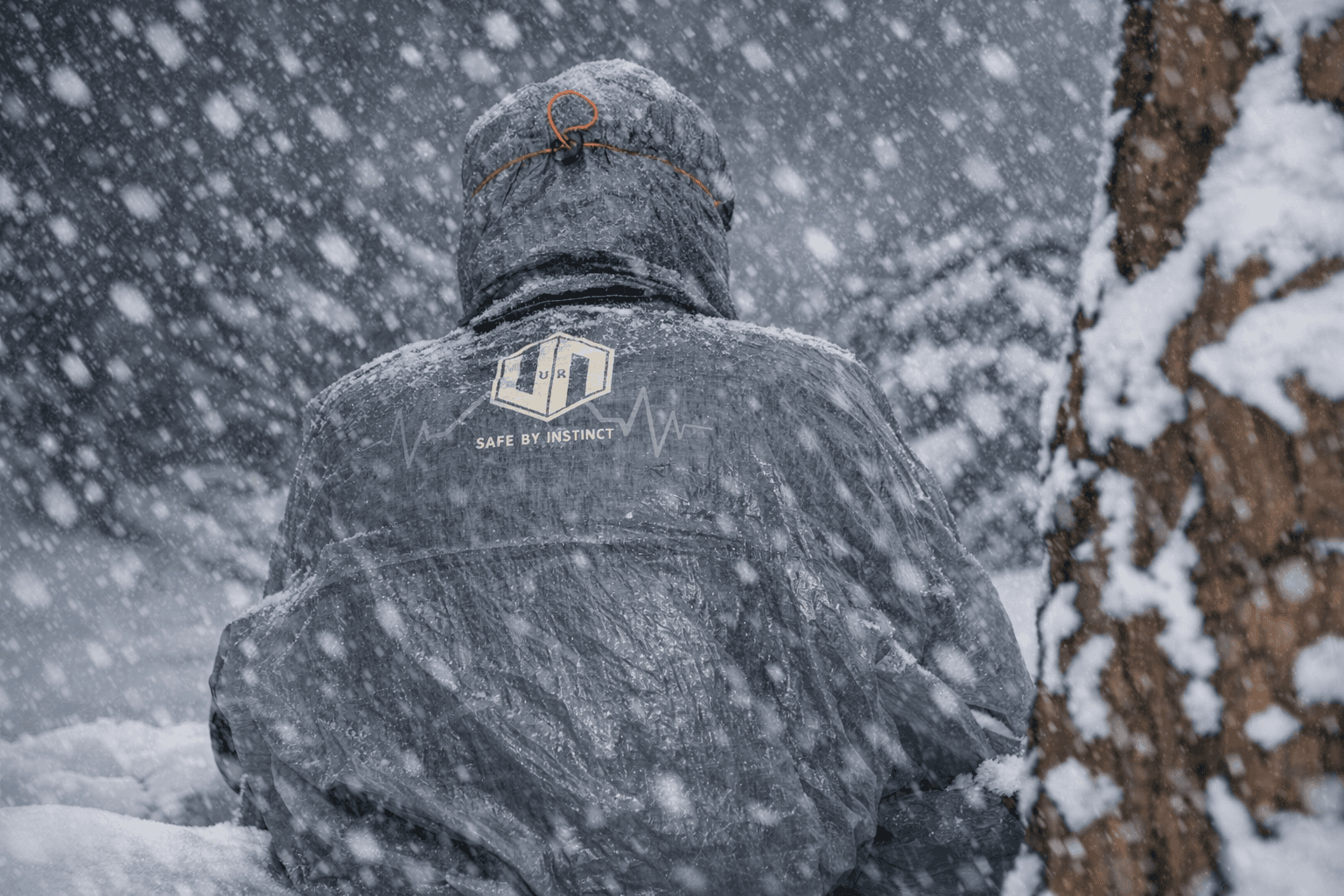
Thermal protection is not only about insulation thickness. It is also about controlling vapour, air movement and the microclimate around the person. Dyneema® Composite Fabrics help create lightweight barrier structures that protect still air and reduce unnecessary heat loss.
Thermal by control
Thermal protection is not only about insulation thickness. It is also about controlling vapour, air movement and the microclimate around the person. Dyneema® Composite Fabrics help create lightweight barrier structures that protect still air and reduce unnecessary heat loss.

Controlled microclimate
For UR® systems, the material value is control: less vapour movement, less unwanted airflow and more stable still air around the person, without relying only on thick insulation.