Lessons
Outdoor first aid
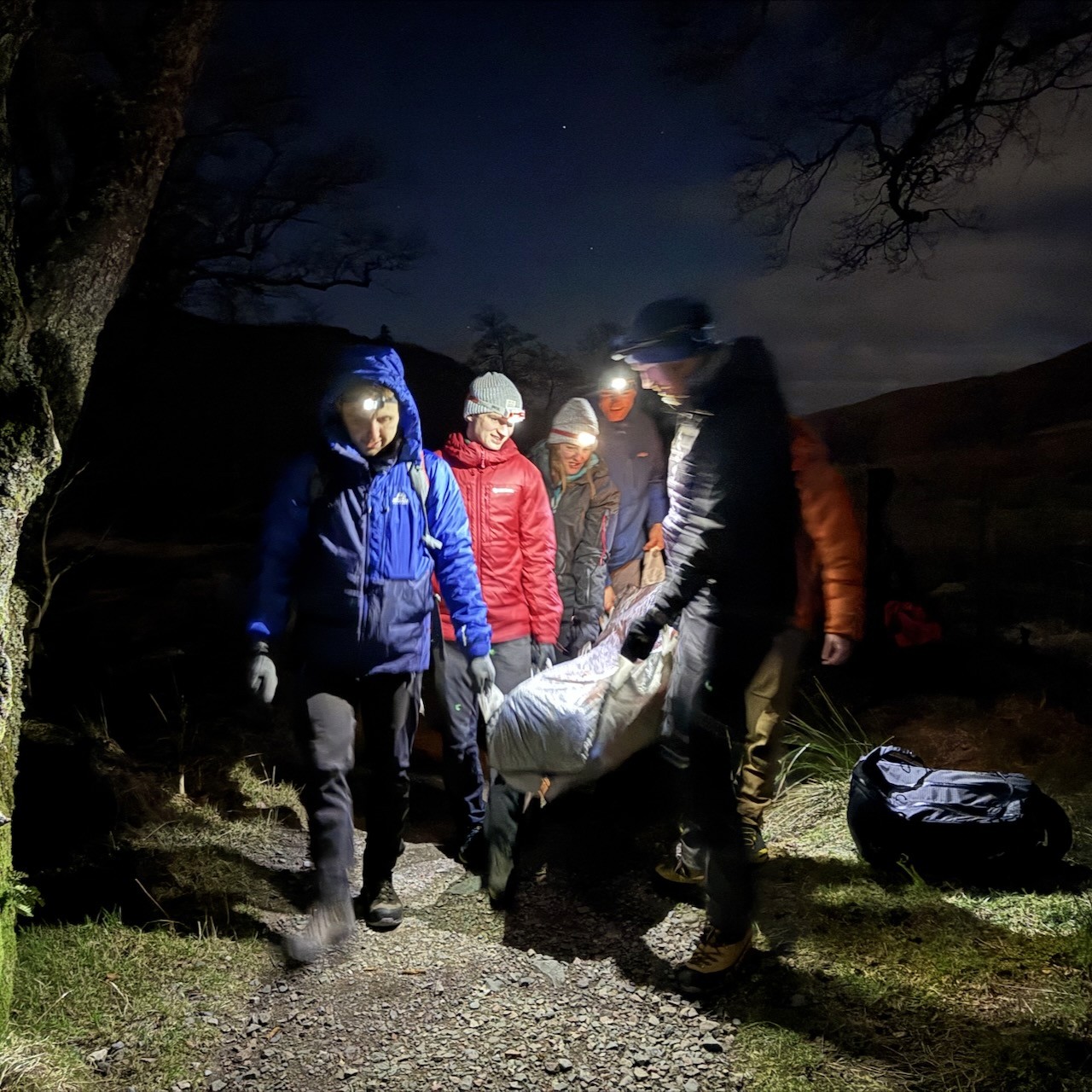
Introduction
Friluftsliv is a Norwegian word often translated as “life in the outdoors.” The word is commonly traced back to Henrik Ibsen, who used it in the poem Paa Vidderne, often translated into English as On the Heights, in 1859. Today, friluftsliv describes more than outdoor recreation. It reflects a Norwegian tradition of moving through nature with simplicity, responsibility, and respect for the conditions.
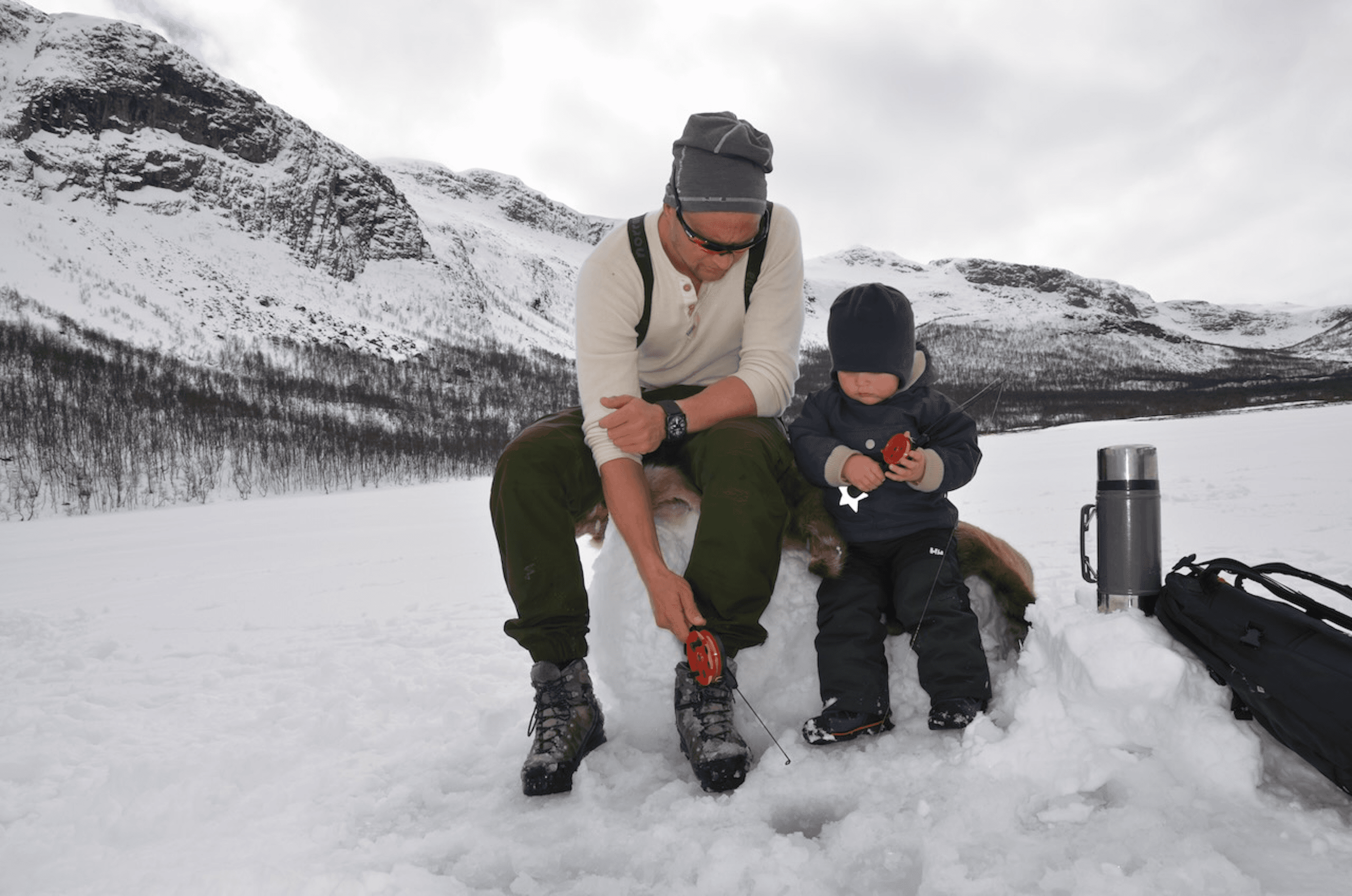
In this article, we use outdoor first aid as the English term for førstehjelp for friluftsliv: first aid adapted to situations where nature, weather, distance, and time are part of the emergency.
Norsk Fjellsportforum, referred to here as NF, is the Norwegian Mountain Sports Forum. NF develops national standards for instructors, guides, and course providers in Norwegian mountain sports and outdoor education.
This article builds on principles from the NF Instructor Guide in Outdoor First Aid, first published in January 2024. The guide describes the First Aid Triangle as a model for patient assessment and prioritization of lifesaving measures outdoors, with breathing, bleeding and warmth as central priorities.
When an accident happens in the city, the ambulance is often only a few minutes away. In the mountains, in the forest, or far out at sea, the situation is different. There, the weather can be the greatest threat. The time to professional help may be hours, or a full day. The patient may be lying on snow, in rain, or in strong wind.
In these situations, it is not always enough to think like you would in an emergency department.
Traditional emergency medicine often relies on algorithms such as ABC (Airway, Breathing, Circulation). This is still basic and important. But in outdoor life, we meet a different reality: cold, wind, wet clothing, long response times, and limited resources. This is why Norwegian outdoor first aid has developed an approach that centers on breathing, bleeding, and warmth.
This is the core of the First Aid Triangle used in courses and instructor training by the Norwegian Mountain Sports Forum.
Nature changes first aid
In urban settings, hypothermia is often seen as a secondary problem. In the mountains, it can be what kills the patient.
A person with a simple ankle fracture in bad weather can quickly develop serious heat loss. An unconscious patient who is breathing normally may die from cold exposure long before the airway becomes the main problem. Even minor injuries can become critical when the body loses its ability to stay warm.
This is why warmth is treated as a lifesaving priority, alongside breathing and major bleeding.
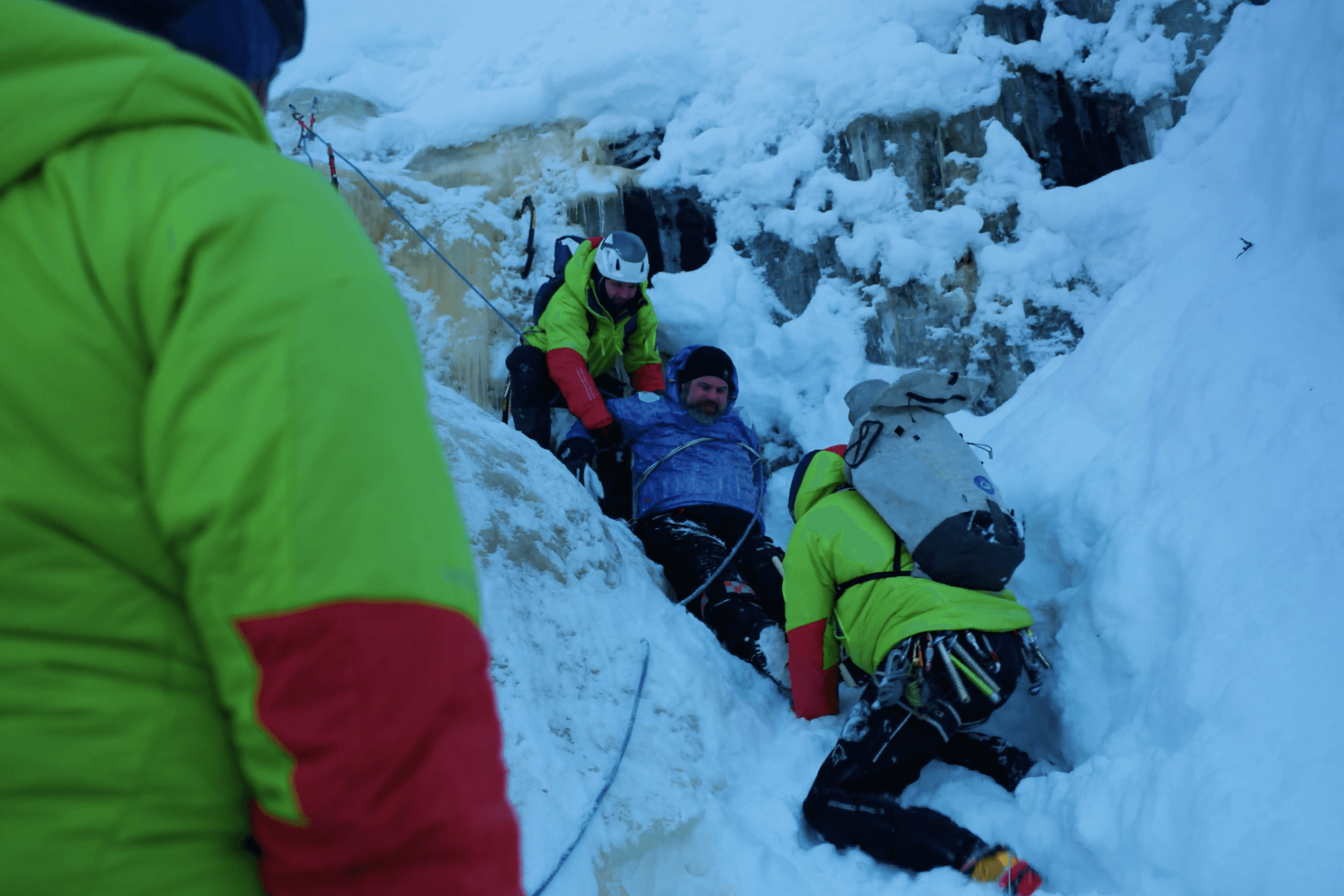
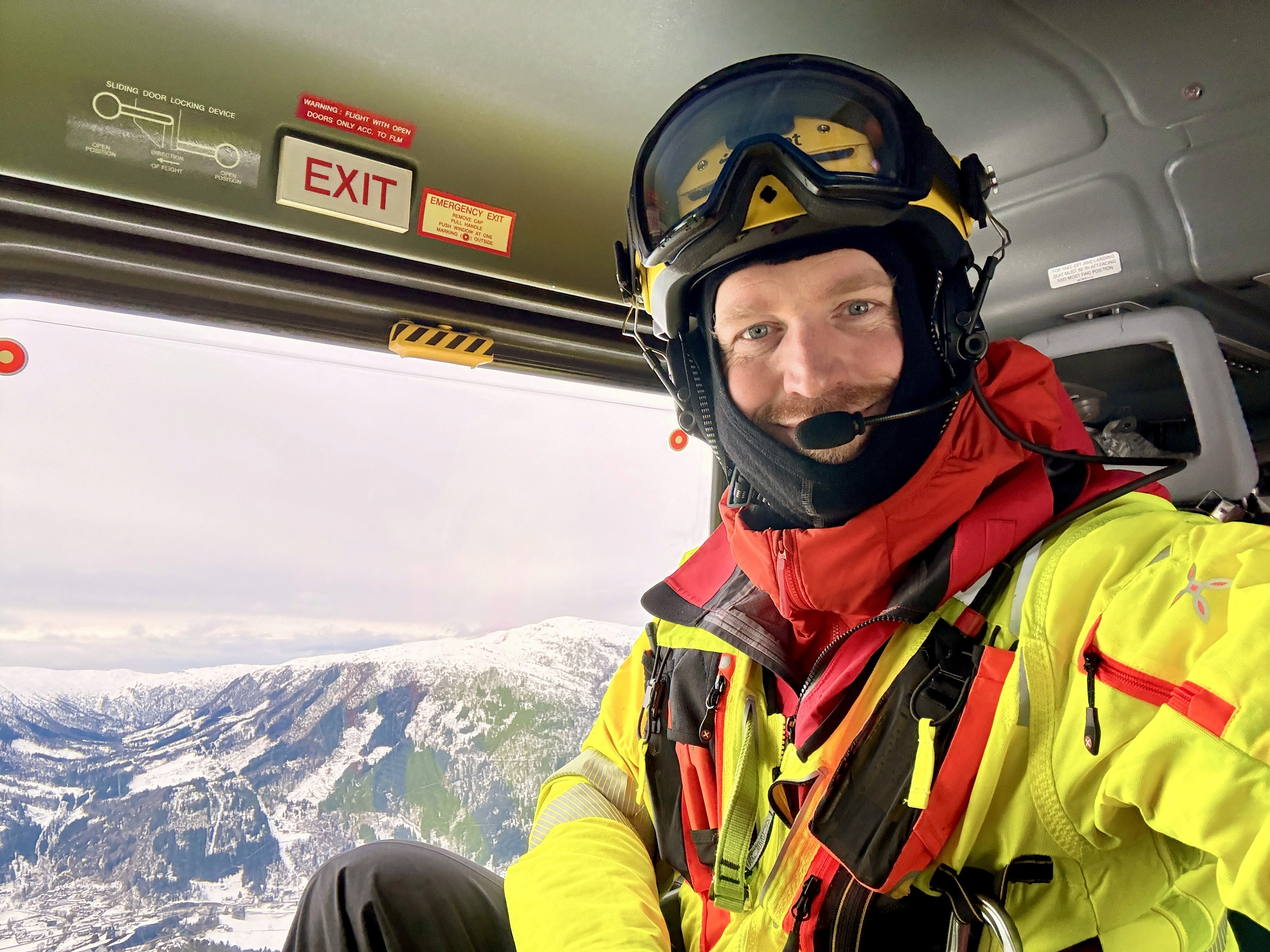
Training in steep rescue with a person with a broken ankle
The NF Basic Course in Outdoor First Aid describes this as the core of lifesaving first aid:
“…systematic patient assessment and the ability to initiate lifesaving measures according to the First Aid Triangle, with main focus on breathing, bleeding, and warmth.”
The same is emphasized in the NF Intro Course in Outdoor First Aid.
A simpler and more practical algorithm
Instead of starting with complicated medical language, the model tries to make first aid intuitive and action-oriented.
Breathing
The first question is simple:
Is the patient breathing? If not, you must act immediately. Open airways and CPR become critical. But in outdoor life, breathing is also about context:
Avalanche
Drowning
Cold exposure
Long transport time
Exhaustion in the mountains
Breathing is not assessed separately from the environment. A cold and wet patient with reduced breathing can deteriorate dramatically simply by lying still on the ground.
Bleeding
Major bleeding must be stopped quickly. In outdoor life, this is often more difficult than in controlled settings:
Gloves are wet
The patient is lying in rough terrain
It is dark
The wind is strong
You may be alone
This is about simple and robust first aid:
Direct pressure
Pressure bandage
Improvisation
Fast action
In practice, the first aider must be able to work with limited equipment and under stress.
Warmth
This is the point that separates outdoor first aid from much of traditional emergency medicine. Warmth is not about comfort. It is about survival. Body temperature affects:
Consciousness
Coordination
Pulse
Breathing
Blood clotting
Decision-making
A cold patient bleeds more. The heart becomes more vulnerable. The patient becomes less able to help themselves. In outdoor life, warmth must therefore be considered early:
Insulate from the ground
Remove wet clothing
Create shelter
Use a bivy bag or windsack
Add dry clothing
Protect the patient from further heat loss
This is not “aftercare”. It is a lifesaving treatment.
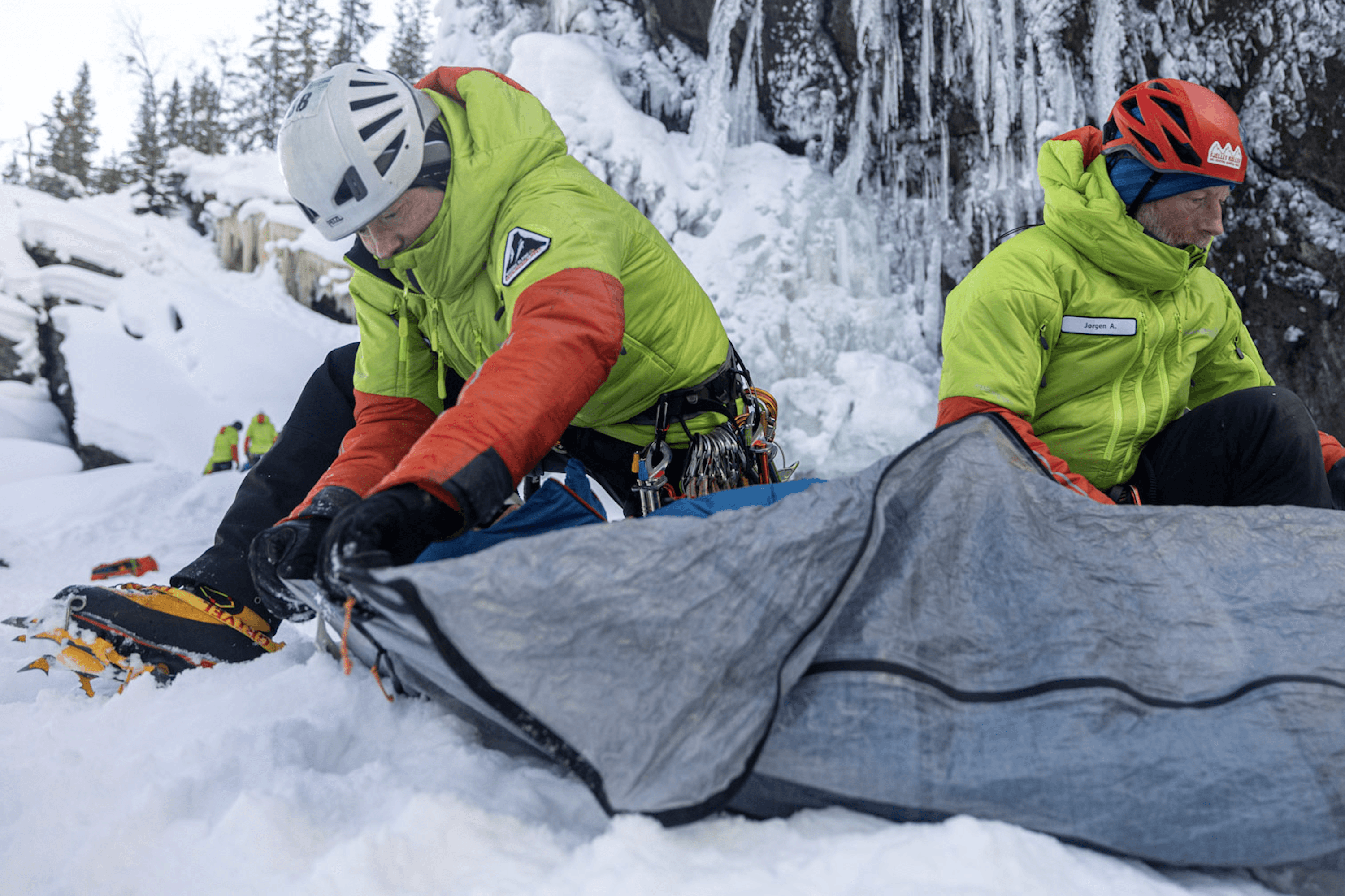
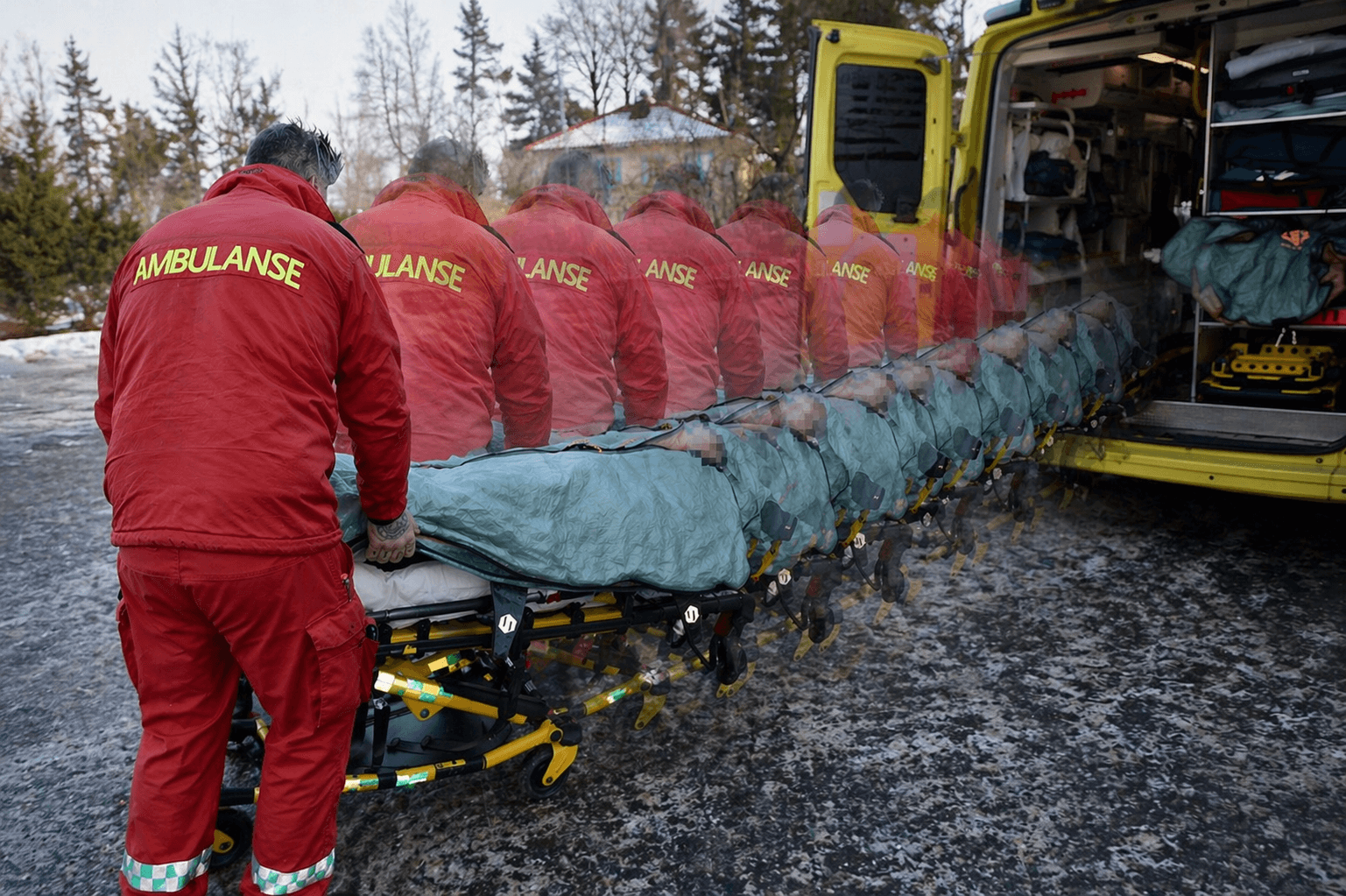
Sheltering the patient with Berge Lite Rescue Bag.
Why this works as teaching
One major challenge in first aid is that people freeze when the situation becomes serious. Many people do not remember complicated algorithms under stress.
“Breathing, bleeding, and warmth” is concrete and easy to remember.
The model works especially well in outdoor life because it connects first aid directly to what people can actually see:
Is the person breathing?
Is the person bleeding?
Is the person getting cold?
This simplicity makes it easier to act early. NF courses, therefore, build much of the teaching around practical training, reflection, and cases outdoors.
First aid must adapt to the environment
Many first aid models are developed for ambulance services and hospitals. Outdoor first aid starts from something different:
Long timelines
Limited resources
Cold and weather
Difficult evacuation
Small groups
Improvisation
This does not mean that traditional emergency medicine is wrong. It means that the context changes the priorities. A person lying wet and still in the winter mountains is in a very different situation from a patient in a hospital.
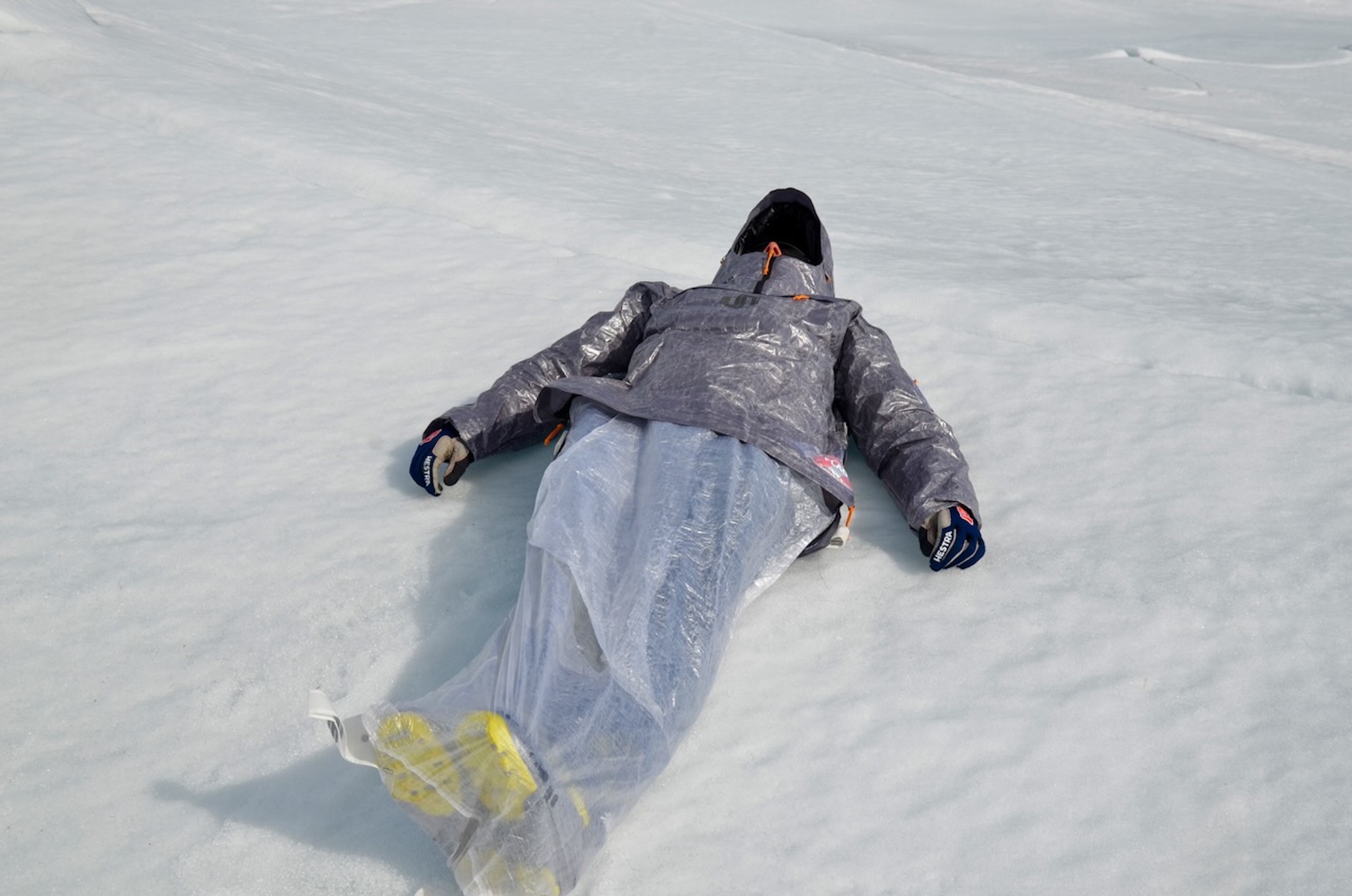
Testing one of the first prototypes of Lun 1.0
Nature is not just the backdrop
In outdoor education, nature is described as an active part of learning, not just a place where learning happens. The same applies to first aid. Weather, wind, snow, and terrain are not just surroundings around the patient. They affect the entire incident:
How the injury develops
How quickly the patient gets worse
Which measures actually work
How long the group must manage on its own
This is why outdoor first aid is as much about understanding nature as it is about understanding medicine.
A Norwegian approach to emergency medicine outdoors
The First Aid Triangle and the focus on breathing, bleeding, and warmth represent a clear Norwegian outdoor tradition:
Practical
Adapted to nature
Based on experience
Simple to teach
Built for long timelines and real conditions
The goal is not to turn ordinary outdoor people into ambulance workers. The goal is to help them make good decisions when help is far away…
…and it often starts with three simple questions:
Is the patient breathing?
Is the patient bleeding?
Is the patient losing heat?
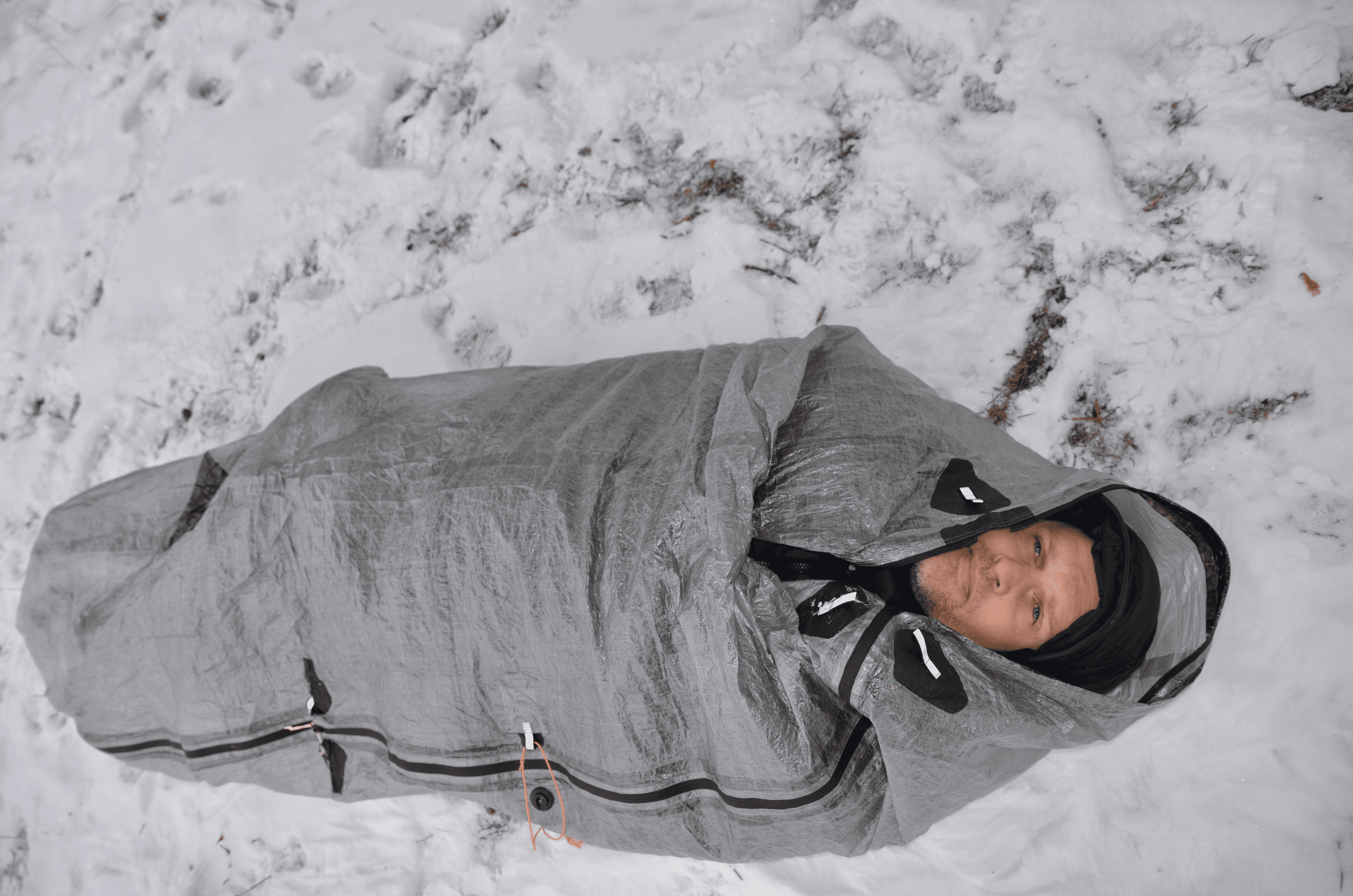
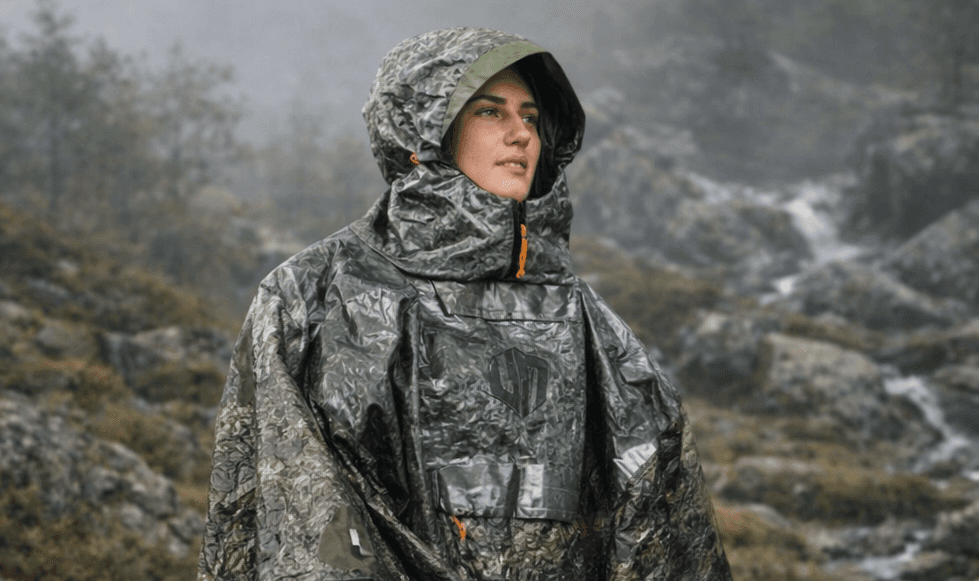
Testing Trygg Lite ShelterWear in Bivi mode.
Reference and further reading
This article builds on professional principles from the NF Instructor Guide in Outdoor First Aid, first edition, published by the Norwegian Mountain Sports Forum on 30 January 2024. The guide was written by the NF First Aid Committee 2023–2024, where I am one of the contributors.
The Norwegian Mountain Sports Forum states that the guide is made available to anyone who wants it, and that it is good practice to credit the authors when using the material.
Download the guide:
Download the NF Instructor Guide in Outdoor First Aid (Norwegian)