Stories
Active heat, field-ready
When passive protection needs active support
Euroheater and UR are jointly developing an integrated thermal protection setup for field use
In hospital care, active warming is already part of the clinical toolbox. Warm air can be used in controlled environments, with trained personnel, monitoring, and established procedures.
The field is different.
Cold, wind, wet clothing, limited access, patient handling, weight restrictions, and long evacuation times change everything. What works inside a hospital cannot simply be moved outside and expected to work in the same way.
The purpose is not to add another piece of equipment to an already complex rescue chain. The purpose is to build a more complete thermal protection setup for field use, where passive protection, insulation, vapor barrier logic, and controlled warm air can work together.
The need is relevant across cold-weather rescue, remote evacuation, tactical operations, and prehospital field care. It becomes especially clear when access is delayed, evacuation takes time, or the patient must remain protected through several stages of the rescue chain.
The problem is not only cold. It is exposure over time.
In rescue and prehospital care, heat loss often begins before the patient is packaged.
It may start after injury, immersion, immobilization, trauma, wet clothing, wind exposure or contact with cold ground. In some situations, the patient can still shiver and produce heat. In others, the ability to compensate may be reduced by exhaustion, injury, shock, intoxication, medication or severe cold stress.
Recent Norwegian research on hypothermia points in the same direction. Prehospital treatment has traditionally relied on a multi-layer model: a vapor barrier close to the patient, insulation, and a windproof and waterproof outer shell. Active external warming is increasingly discussed and used within this model, but the impact of current field solutions remains limited, and there is still a clear need for improved technology and system integration.
This is also the direction highlighted by the Norwegian Air Ambulance Foundation in their recent article on warm air for cold patients. Warm air is already used inside hospitals. The open question is how similar principles can be adapted for use before the patient reaches the hospital.
From wrapping to thermal architecture
A rescue bag is often understood as something that covers the patient.
We see it differently.
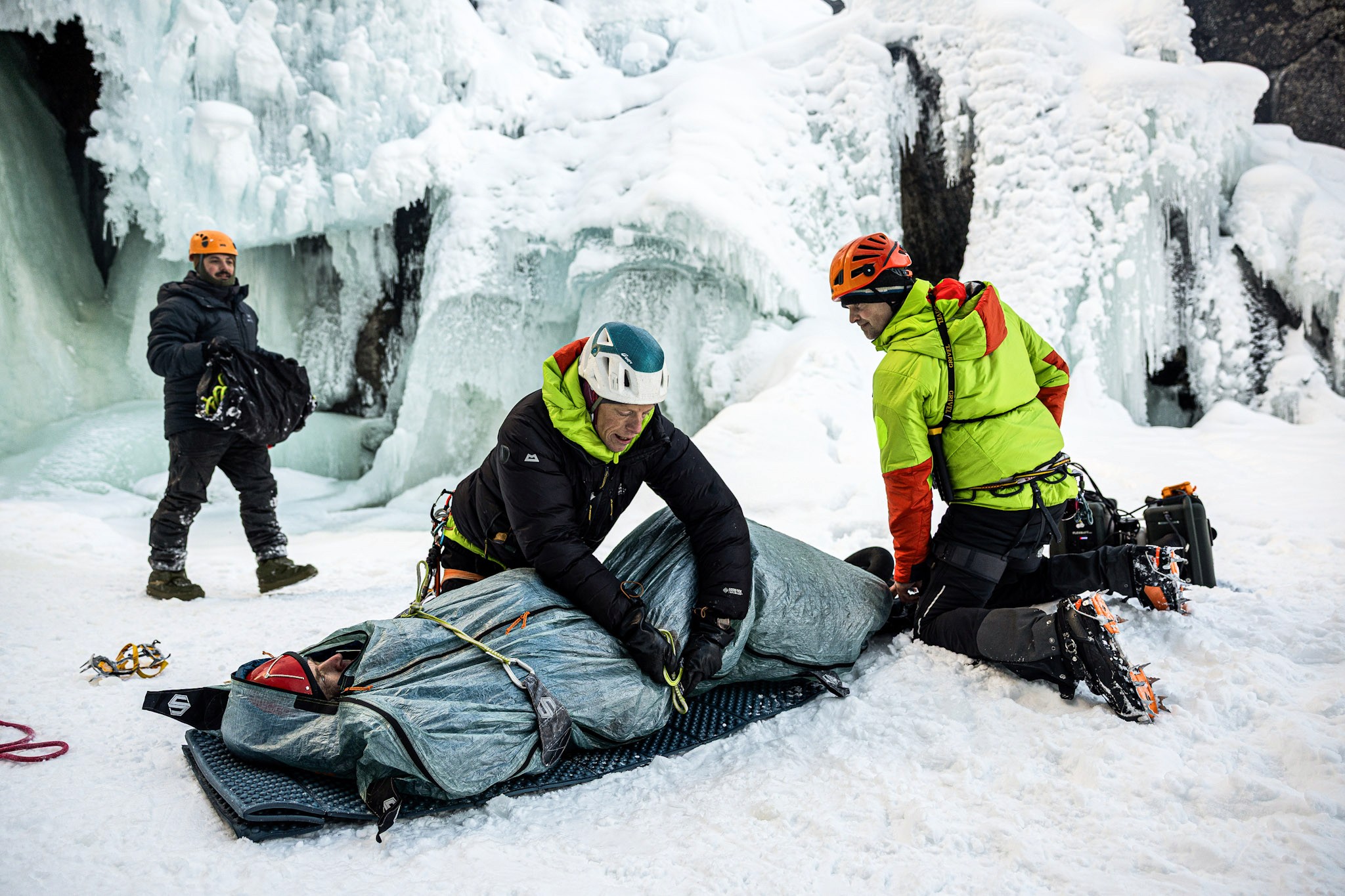
The rescue bag is the architecture around the patient. It defines how heat is preserved, how moisture is controlled, how insulation performs, how the patient can be accessed, how movement is reduced, and how the system can remain useful during treatment, transport and handover.
This matters because thermal protection is not one action. It is a chain of actions.
Wet clothing must be managed. Evaporative heat loss must be reduced. Insulation must stay functional. Wind and water must be kept out. The patient must remain accessible. Handling should be minimized. And if external heat is introduced, it must be introduced in a controlled and predictable way.
That is why UR develops the Berge Rescue Bag as a system platform, not only as a bag.
Joint development, clear responsibilities
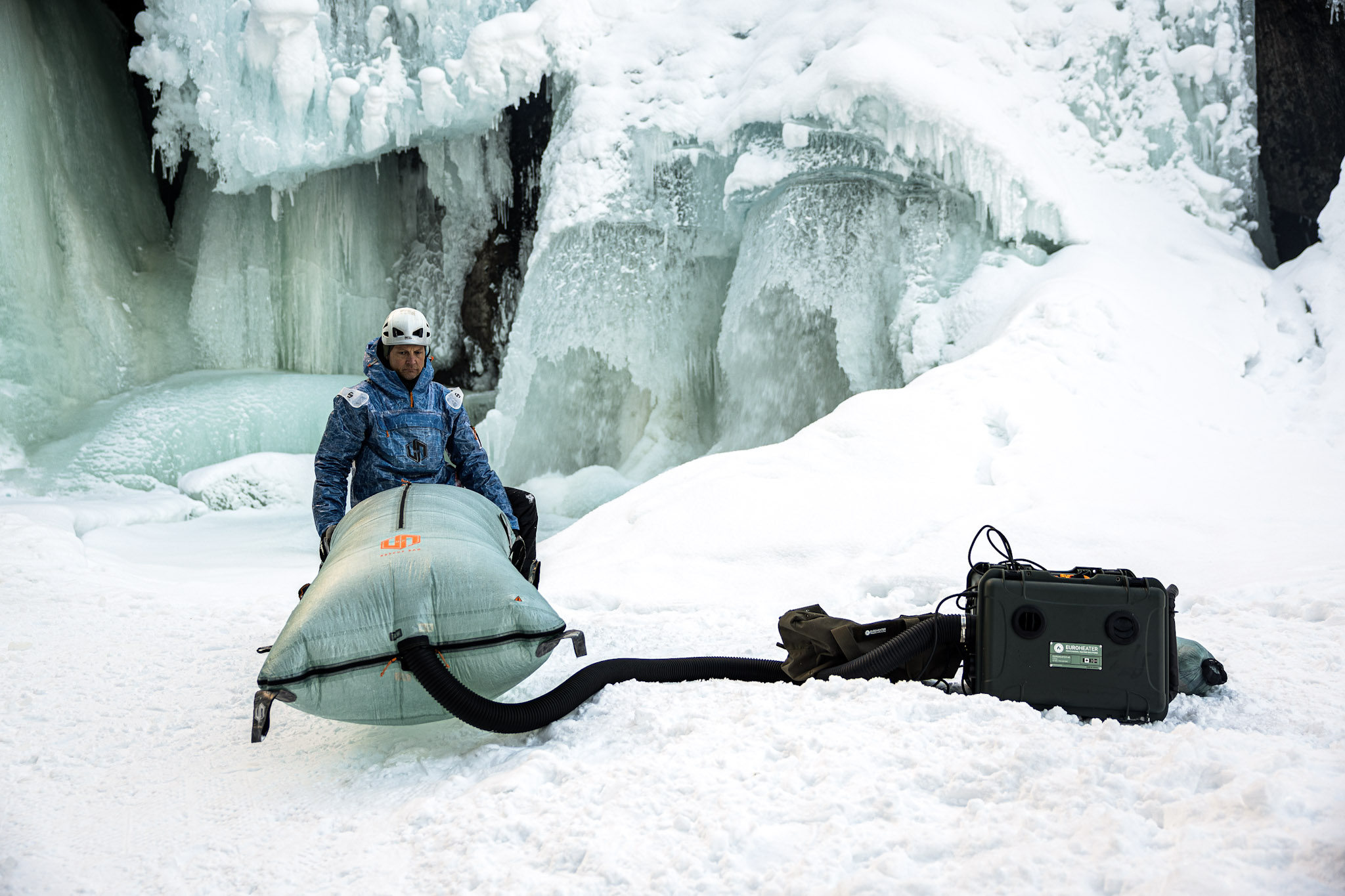
Euroheater and UR are jointly developing an integrated setup for controlled warm air in field rescue environments.
Euroheater leads the EvacCore heat module: the lightweight air heater, warm air delivery technology, fuel and battery setup, and operational heat expertise.
UR leads the Berge Rescue Bag architecture: patient protection, insulation, vapor barrier logic, access, handling, and workflow continuity.
The shared development area is the interface between the two systems.
How should warm air enter the protected environment? How can the microclimate around the patient be supported without applying direct heat to the body? How can the setup remain simple enough for field use, while still robust enough for demanding operations?
That interface is where the user value is created.
Integrating EvacCore
Euroheater’s EvacCore is a lightweight air heater developed for field operations, evacuation, and demanding operational situations.
(Bilde av EvacCore)
For UR, the important part is not only the heater itself. It is what the heater makes possible when the rescue bag is designed around integration.
EvacCore is designed to supply tempered air to the enclosed environment of a rescue bag. The heat is applied to the environment around the person, not directly to the body. This distinction is important.
Together, Euroheater and UR are not presenting this as a stand-alone active patient warming device. We are developing an insulated rescue bag system prepared for controlled external heat input into the protected environment around the patient.
The purpose is to help stabilize the microclimate inside the rescue system during rescue, evacuation, and field care.
Built for real field constraints
In many rescue scenarios, the most important question is not whether the patient can be covered.
It is whether the patient can remain protected as the situation changes.
The rescue team may need to move, monitor, treat, wait, transfer, and hand over without repeatedly exposing the patient to cold, wind, or moisture.
This creates several practical requirements:
The system must be light enough to move.
It must be robust enough for field use.
It must reduce unnecessary handling.
It must allow controlled access.
It must work with external heat without turning the setup into a complex technical procedure.
The estimated total weight for the integrated system, including an insulated Berge Rescue Bag, EvacCore heater, fuel, and battery for 24 hours of operation, is less than 13 kg!
That makes the setup relevant not only for vehicle-based rescue, but also for operations where equipment may need to be carried, staged, cached, or delivered by drone.
Delivered by drone
During a recent field exercise, the insulated Berge Rescue Bag and heater module were flown into the scenario by drone and used as one integrated setup.
To our knowledge, this is the first time a rescue bag and heater have been delivered by drone as a combined thermal protection system.
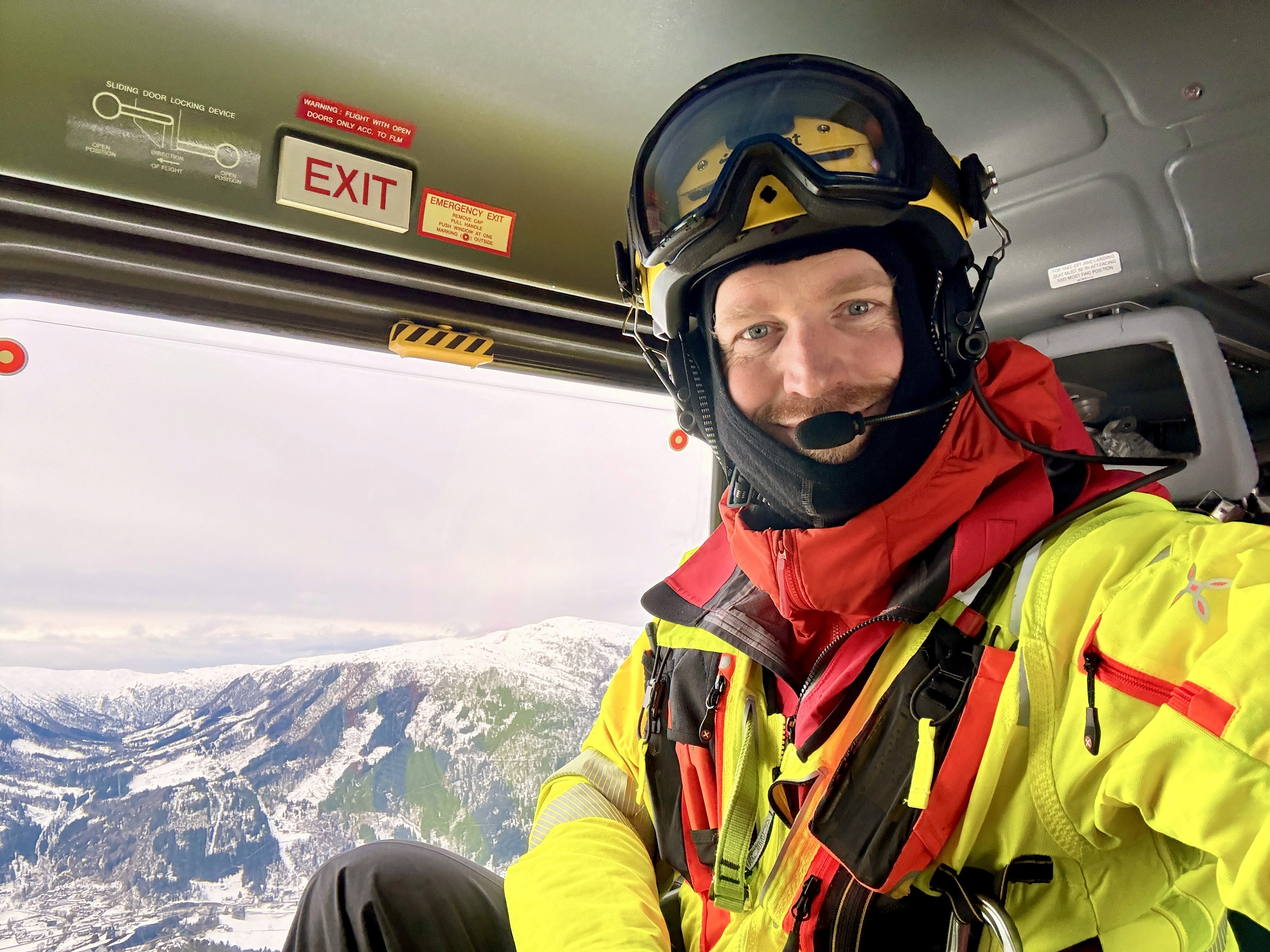
Henrik Sollie, Co-founder and CEO of UR
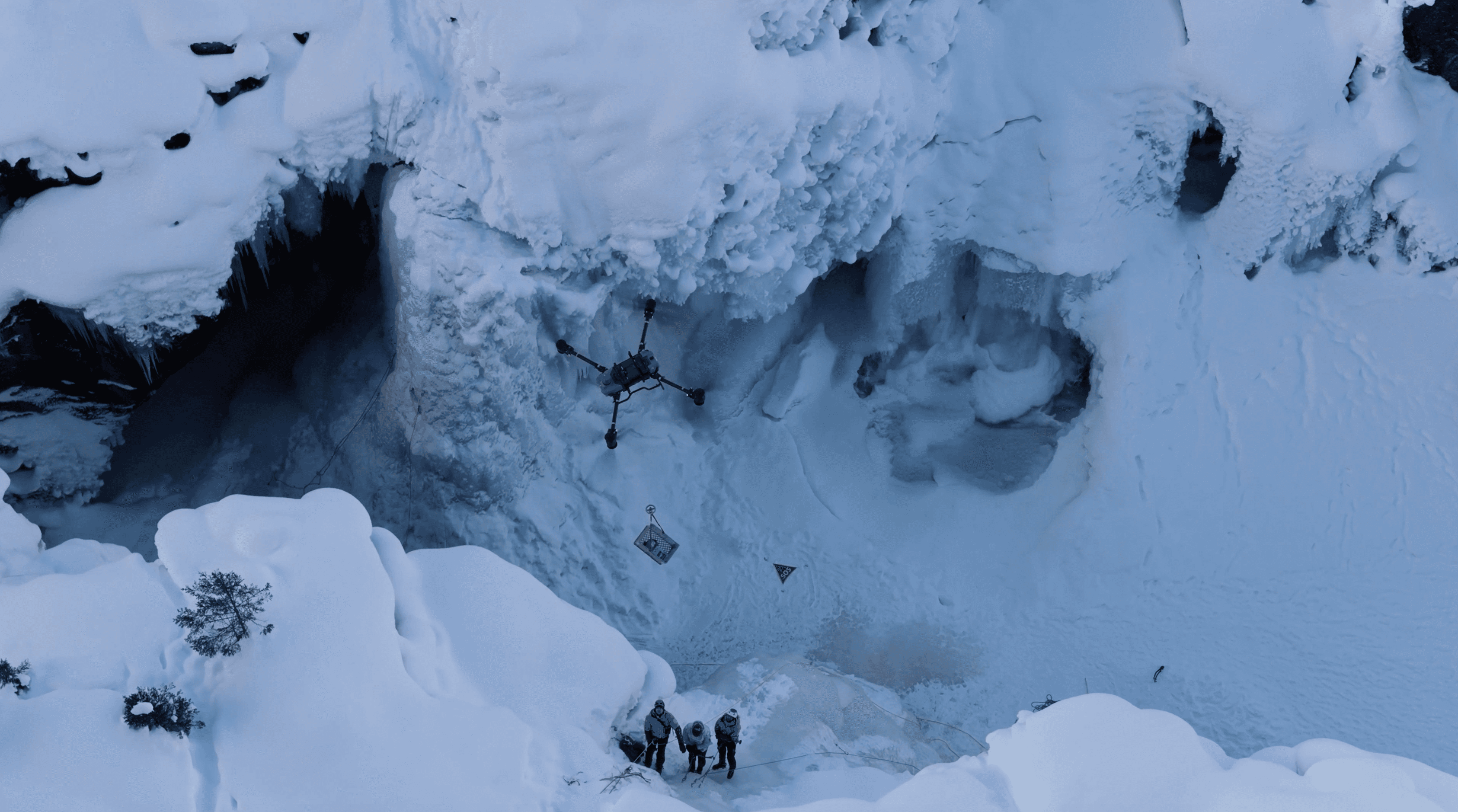
The exercise points toward a new operational possibility: delivering shelter, patient protection, and heat support to the point of need before the full rescue chain can arrive.
A drone cannot replace rescuers. But it may help deliver the first layer of protection earlier. In cold environments, that time can matter.
Why this matters
Thermal protection is often treated as a supporting task.
It should not be.
Temperature loss affects physiology, patient comfort, bleeding, oxygen demand, and the complexity of further treatment. In the field, every transition can create new heat loss: first contact, packaging, treatment, transport, waiting, and handover.
A better system must protect across all of these moments.
That is why the integration between EvacCore and Berge Rescue Bag is not mainly about adding heat. It is about preserving continuity.
A protected environment is created around the patient. Warm air can be introduced into that environment. The patient can remain inside the same system for longer. The rescue team can reduce repacking and unnecessary exposure. The thermal strategy becomes part of the rescue workflow, not an afterthought.
Not more equipment. Better integration.
The field does not need more loose components. It needs fewer decisions under pressure.
Jonas Langseth - Rescuer and Co-founder of UR

The goal with the EvacCore and Berge Rescue Bag integration is to make thermal support easier to deploy as part of an already familiar rescue bag workflow.
For the responder, the value is practical:
A protected patient environment.
Controlled warm air input.
Reduced exposure during evacuation.
Less need for repacking.
Long-duration heat support.
A system suited for cold-weather rescue, remote evacuation, tactical operations and prolonged field care.
The result is not just a product configuration.
It is a step toward a new category of rescue systems: insulated, heat-ready and built for long-duration operations in cold environments.
Regulatory note
The Berge Rescue Bag is developed as a rescue bag system. The integrated EvacCore setup is not marketed as an approved medical device for active patient warming or treatment of hypothermia.
The system is designed to allow controlled warm air to be introduced into the protected environment around the patient. Any operational use involving patients must follow applicable regulations, local protocols, training requirements and clinical responsibility.
System snapshot
Joint development: Euroheater and UR
Heat module: Euroheater EvacCore
Rescue system: Berge Thermo Rescue Bag
Estimated total system weight: approximately 13 kg
Included in estimate: rescue bag, heater, fuel, and battery
Estimated runtime: up to 24 hours
Primary use cases: cold-weather rescue, remote evacuation, tactical operations, Arctic environments, and prolonged field care
Heat principle: controlled warm air is introduced into the protected environment, not direct heat applied to the body
Development status: integration and field validation ongoing